
Rural Cultural Weaves in Paintings through the Motif of the Scarecrow (Vizooka)
Awadhesh Misra : The Visionary of Poetic Compositions
In the landscape of contemporary Indian art, artists who sustain an equal command over creative practice and critical discourse are rare. Awadhesh Misra stands among those few whose artistic creation, writing, editing, and pedagogy together constitute a coherent cultural praxis. His art does not emerge in isolation; it is deeply rooted in the rural environment that shaped his childhood and adolescence. The memories, rhythms, ecological sensibilities, and ethical frameworks of village life form the enduring substratum of his visual language. Misra’s paintings therefore function not merely as aesthetic artefacts but as layered visual narratives where memory, metaphor, and social consciousness coalesce into a deeply reflective artistic vision.
Awadhesh Misra’s artistic identity is inseparable from his personal discipline and intellectual clarity. Soft-spoken, contemplative, and socially responsive, he embodies a rare equilibrium between humility and creative conviction. His life reflects rigorous self-regulation and sustained engagement with artistic and literary practices, enabling him to work simultaneously as a painter, critic, editor, curator, and educator. This harmony between life and practice becomes visible in his paintings, where compositional restraint coexists with conceptual depth and poetic openness. The coherence between Misra’s personality and his image-making is striking. His simplicity of living, conversational lucidity, and absence of performative excess resonate strongly with the visual economy of his canvases. His paintings avoid unnecessary formal complications; instead, they communicate through experiential authenticity and emotional resonance. The result is a body of work that appears accessible on the surface yet unfolds into multiple layers of interpretation upon deeper engagement.
Misra’s artistic journey began in rural India, where mud walls, courtyards, harvested fields, and open skies became his earliest pictorial spaces. Drawing with charcoal, chalk, clay pigments, and improvised materials, he internalized the tactile vocabulary of village culture long before receiving academic training. This foundational relationship with indigenous visuality would later become central to his mature artistic language. Formal education at the College of Art and Craft, Lucknow (1989–1991), under the guidance of Nityanand Mohapatra, sharpened his understanding of structure and form. His subsequent studies at Banaras Hindu University (BFA 1991–1995; MFA 1995–1997) under teachers such as Dr. R. N. Mishra, Raghuvir Sen Dhir, and Dilip Dasgupta expanded his engagement with modernist experimentation and contemporary painterly vocabularies. During this formative period, Misra gradually moved beyond academic realism toward expressive abstraction. Working extensively in oil and mixed media, he experimented with spatulas, rollers, layered textures, and unconventional surface treatments. His large monochromatic depictions of Lucknow’s architectural heritage revealed an early ability to reinterpret historical memory through contemporary visual syntax. Yet even within these urban explorations, the sensibility of the rural imagination remained deeply embedded.
A defining dimension of Misra’s career has been the simultaneous evolution of his roles as artist and critic-editor. His association with the State Lalit Kala Akademi, Uttar Pradesh, contributed significantly to the revitalization of institutional publications and documentation projects. Later, through his editorial engagement with the international journal of visual art Kala Dirgha, he helped expand critical dialogue around Indian contemporary art. This intellectual involvement enriched his artistic vision, lending his paintings a rare awareness of aesthetics, cultural theory, and social transformation without reducing them to ideological statements. The most compelling and philosophically mature chapter of Misra’s oeuvre emerges through the Vizooka (Scarecrow) series. Rooted in childhood memories of agrarian landscapes, the scarecrow evolves in his paintings into a profoundly layered metaphor. Traditionally, the scarecrow is a humble rural object positioned within agricultural fields to protect crops from birds. In Misra’s visual universe, however, the Vizooka transcends its utilitarian function and becomes an embodiment of social anxiety, fractured authority, existential vulnerability, and cultural transition.
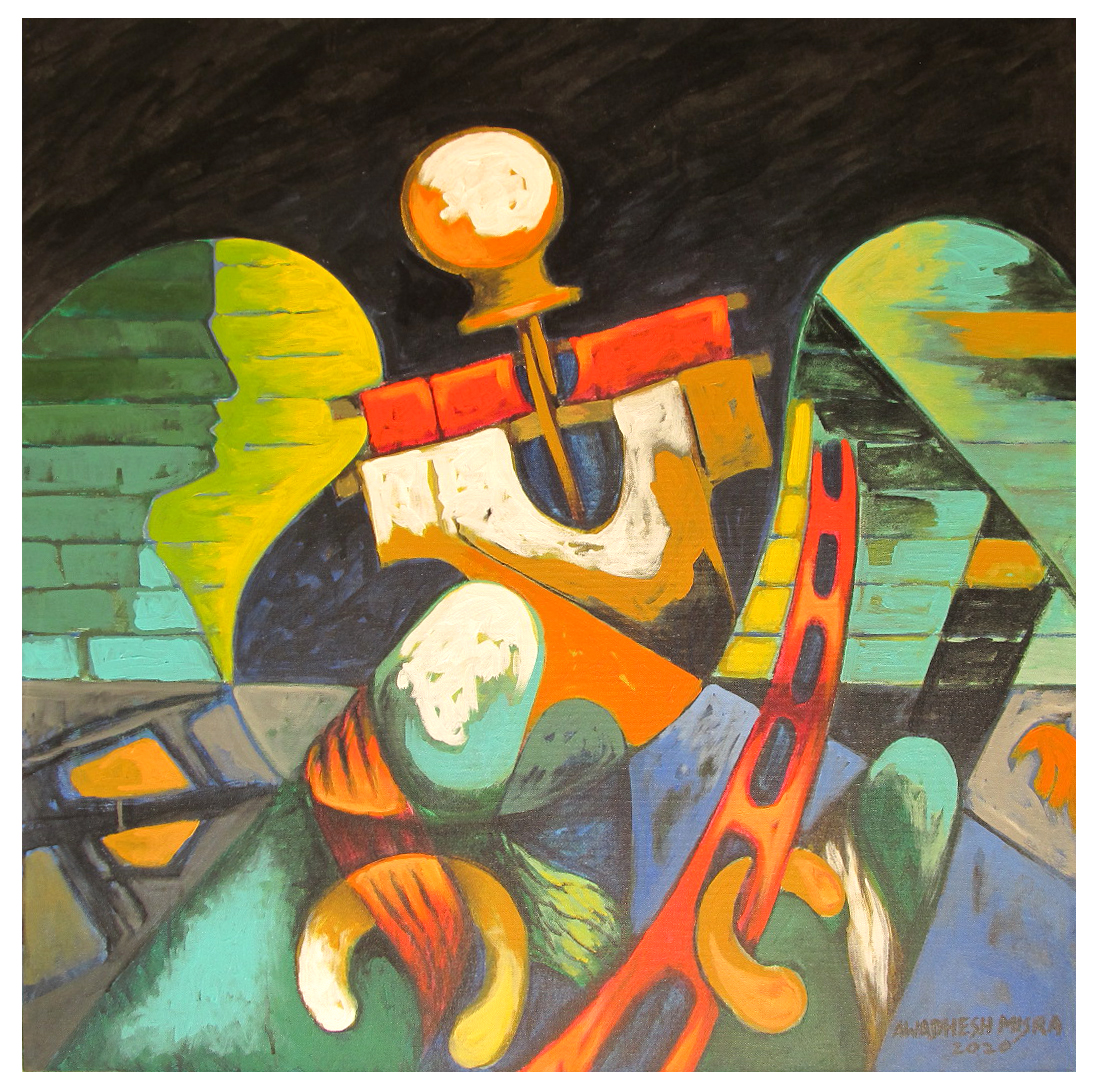
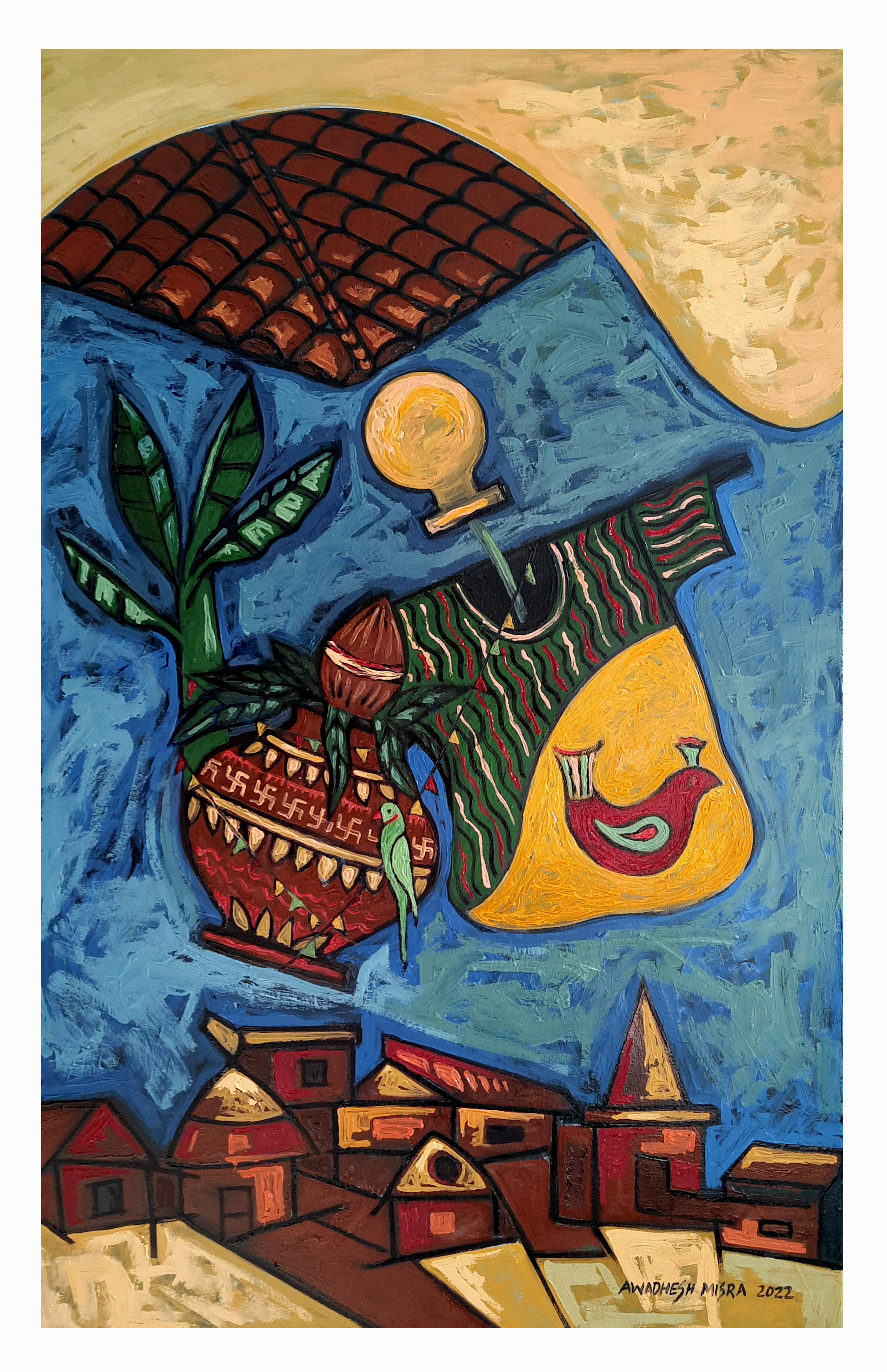
The 2021–2026 Vizooka Returns compositions especially reveal this expanded symbolic framework. These works move beyond straightforward figuration and enter a poetic terrain where abstraction and memory interact fluidly. The scarecrow appears not merely as a rural object but as a metaphysical presence — at times protective, at times fragile, occasionally ironic, and often deeply introspective. It becomes a witness to shifting moral landscapes and changing human relationships with nature, labor, and community. Unlike conventional narrative painting, Misra deliberately avoids literal storytelling. The titles — Composition 01, 02, 03 and so forth — resist fixed interpretation and instead open contemplative space for viewers. Meaning in these works emerges through relationships between color, form, gesture, and silence. The repetition of motifs across multiple canvases creates the impression of an ongoing visual meditation rather than isolated artworks. Each composition functions like a poetic stanza within a larger philosophical continuum.
One of the most striking aspects of the Vizooka Returns series is its chromatic vitality. Misra’s palette derives directly from sensory memories of rural India: earthen ochres, monsoon blues, agrarian greens, festive yellows, smoky blacks, and luminous reds. These colors are not decorative devices but carriers of lived experience. They evoke the smell of wet soil, the heat of harvested fields, the rhythm of village fairs, and the quiet expanses of evening skies. Through color, Misra transforms memory into atmosphere. His paintings frequently incorporate recurring motifs such as paper boats, pinwheels, alphabets, kites, ploughs, mud stoves, ladders, birds, and fragmented architectural forms. These are not nostalgic embellishments but experiential residues of childhood and collective rural culture. Their presence imbues the paintings with emotional authenticity and prevents them from slipping into romanticized folklore. Misra’s rural world is neither sentimental nor exoticized; it is remembered with affection but also examined with philosophical distance.
The Vizooka itself undergoes constant transformation across the series. Sometimes it appears skeletal and vulnerable, merging almost invisibly into surrounding textures. At other moments it assumes anthropomorphic authority, clothed in coats, ties, or symbolic garments suggestive of institutional power. In some compositions the scarecrow appears fragmented or suspended within abstract geometries, hinting at the instability of contemporary social structures. Through these shifting manifestations, Misra interrogates the fragile boundaries between protection and control, identity and performance, permanence and decay. Textural richness plays a crucial role in the emotional force of these works. Misra’s surfaces oscillate between opacity and transparency, density and openness. Layers of paint accumulate like sedimented memory, while gestural marks interrupt and destabilize compositional order. The paintings possess a tactile eloquence where spontaneity and discipline coexist. This painterly rhythm recalls poetic composition itself — pauses, repetitions, silences, and intensities unfolding through visual cadence.
The spatial language of the Vizooka Returns series is equally significant. Misra often constructs ambiguous environments where foreground and background dissolve into one another. Forms emerge and recede simultaneously, creating a dreamlike atmosphere. This ambiguity enables the paintings to function as psychological as well as cultural spaces. Viewers are not presented with fixed narratives; instead, they are invited into a contemplative dialogue where personal memory intersects with collective experience. At a deeper level, the Vizooka Returns series reflects upon the transformation of rural India itself. Rapid urbanization, technological intrusion, migration, ecological imbalance, and changing social values form the invisible backdrop of these works. Yet Misra does not respond through direct political imagery or overt commentary. Rather, he employs metaphor and poetic suggestion. The scarecrow becomes a silent witness to disappearing agrarian rhythms and evolving human anxieties.
There is also a profound philosophical dimension underlying these compositions. The Vizooka often appears suspended between presence and absence, life and objecthood, vigilance and helplessness. In this ambiguity lies the existential strength of Misra’s art. The scarecrow is simultaneously self and society, guardian and victim, memory and warning. Through this humble rural figure, Misra meditates upon the fragile condition of contemporary humanity. What distinguishes Awadhesh Misra’s work within contemporary Indian painting is precisely this ability to synthesize rural memory with modern visual language. His paintings are deeply Indian in cultural sensibility yet universal in emotional resonance. They speak of specific landscapes while addressing broader human concerns — alienation, resilience, memory, ecological belonging, and ethical uncertainty.
Over more than three decades of sustained practice, Misra has developed an artistic language that remains remarkably independent of transient artistic fashions. Unconcerned with immediate validation, he continues to engage rigorously with painting while simultaneously contributing to the discourse of Indian contemporary art through criticism, editing, and documentation. His oeuvre demonstrates that artistic practice can still function as a meaningful dialogue between personal memory, cultural consciousness, and philosophical reflection. Ultimately, the Vizooka Returns series stands as a testament to the enduring power of metaphor in contemporary art. Through color, texture, abstraction, and symbolic transformation, Awadhesh Misra elevates the humble scarecrow into a profound visual philosophy. His paintings invite viewers not merely to observe but to remember, reflect, and inhabit the subtle emotional landscapes of lived experience. In these canvases, the rural and the universal merge seamlessly, producing a visual poetry that is intimate yet expansive, grounded yet transcendent.
Here, the Vizooka remains not simply a figure within the field, but a sentinel of memory itself — silently guiding us through the rhythmic tides of color, culture, and the fragile human spirit.
Awadhesh Misra, Composition 08, 2026, Acrylic on Canvas, 90x120 Cms
Awadhesh Misra, Composition 07, 2026, Acrylic on Canvas, 90x90 Cms
Awadhesh Misra, Composition 06, 2026, Acrylic on Canvas, 90 Cms Circle
Awadhesh Misra, Composition 05, 2026, Acrylic on Canvas, 90x120 Cms
Awadhesh Misra, Composition 04, 2026, Acrylic on Canvas, 90x120 Cms.
Awadhesh Misra, Composition 03, 2026, Acrylic on Canvas, 90x120 Cms
Awadhesh Misra, Composition 02, 2026, Acrylic on Canvas, 90x90 Cms.
Awadhesh Misra, Composition 01, 2026, Acrylic on Canvas, 75x90 Cms.
(Artist Camp organized by Dept of Culture, Govt of Uttar Pradesh, SLKA UP, University of Lucknow and Jai Shankar Prasad Trust)
Awadhesh Misra, Composition 05, 2025, Acrylic on Canvas, 90x120 Cms.
Awadhesh Misra, Composition 04, 2025, Acrylic on Terracotta Plate, 25 Cms Diameter
Awadhesh Misra, Composition 03, 2025, Acrylic on Canvas, 90x90 Cms
Awadhesh Misra, Composition 02, 2025, Oil on Canvas, 90x120 Cms
Awadhesh Misra, Composition 01, 2025, Acrylic on Canvas, 75x90 Cms
Artist Camp, Dept of Painting, BHU, Varanasi, 2025 (Collection - BHU, Varanasi)
Awadhesh Misra, Composition 04, 2024, Acrylic on Canvas, 150x210 Cms.
Artist Camp, Tansen Sangeet Samaroh, Gwalior, 2024 (Collection - MP Government)
Awadhesh Misra, Composition 03, 2024, Oil on Canvas, 90x90 Cms.jpg
Awadhesh Misra, Composition 02, 2024, Acrylic on Canvas, 90x90 Cms
Awadhesh Misra, Composition 01, 2024, Acrylic on Canvas, 90x90 Cms
Awadhesh Misra, Composition 03, 2023, Oil on Canvas, 90x90 Cms
Awadhesh Misra, Composition 02, 2023, Acrylic on Canvas, 90x90 Cms
Awadhesh Misra, Composition 01, 2023, Acrylic on Canvas, 90x90 Cms
Awadhesh Misra, Composition 09, 2022, Oil on Canvas, 90x90 Cms
Awadhesh Misra, Composition 08, 2022, Acrylic on Canvas, 90x90 Cms
Awadhesh Misra, Composition 07, 2022, Acrylic on Canvas, 90x90 Cms
Awadhesh Misra, Composition 06, 2022, Oil on Canvas, 75x120 Cms
Awadhesh Misra, Composition 05, 2022, Oil on Canvas, 75x120 Cms
Awadhesh Misra, Composition 04, 2022, Acrylic on Canvas, 90x90 Cms
Awadhesh Misra, Composition 03, 2022, Acrylic on Paper, 55x75 Cms
NOT AVAILABLE
Awadhesh Misra, Composition 02, 2022, Oil on Canvas, 90x90 Cms
Awadhesh Misra, Composition 01, 2022, Oil on Canvas, 90x90 Cms
Awadhesh Misra, Composition 17, 2021 Acrylic on Canvas 90x90 Cms
Collection : Ayodhya Shodh Sansthan, Department of Culture, Govt of UP
 |
| Awadhesh Misra, Composition 16, 2021 Oil on Canvas 90x90 Cms |
 |
| Awadhesh Misra, Composition 15, 2021 Oil on Canvas 90x90 Cms |
 |
| Awadhesh Misra, Composition 14, 2021, Oil on Canvas, 90x90 Cms |
|
 |
| Awadhesh Misra, Composition 13, 2021, Acrylic on Paper, 55x75 Cms |
 |
Awadhesh Misra, Composition 12, 2021 Oil on Canvas 75x120 Cms
|
 |
| Awadhesh Misra, Composition 11, 2021 Oil on Canvas 90x90 Cms |
 |
Awadhesh Misra, Composition 10, 2021 Oil on Canvas 28x32 Inches
|
Awadhesh Misra, Composition 01, 2020 Acryic on Canvas 90x90 Cms
 |
Awadhesh Misra, Composition 01, 2021 Oil on Canvas 120x120 Cms
|
 |
Awadhesh Misra, Composition 02, 2020 Acrylic on Canvas 75x90 Cms
|
 |
Awadhesh Misra, Composition 02, 2021 Acrylic on Canvas 90x90 Cms
|
 |
Awadhesh Misra, Composition 03, 2020 Acrylic on Canvas 90x90 Cms
|
 |
Awadhesh Misra, Composition 03, 2021 Oil on Canvas 90x90 Cms
|
 |
Awadhesh Misra, Composition 04, 2020 Oil on Canvas 120x120 Cms
|
 |
Awadhesh Misra, Composition 04, 2021 Poster Colour on Handmade Paper 22x30 Inches
|
 |
Awadhesh Misra, Composition 05, 2020 Acrylic on Canvas 90x90 Cms
NOT AVAILABLE
|
 |
Awadhesh Misra, Composition 05, 2021 Poster Colour on Handmade Paper 22x30 Inches
NOT AVAILABLE
|
 |
Awadhesh Misra, Composition 06, 2021 Poster Colour on Handmade Paper 22x30 Inches
|
 |
Awadhesh Misra, Composition 07, 2021 Acrylic on Canvas 90x90 Cms
|
 |
Awadhesh Misra, Composition 08, 2021 Oil on Canvas 90x90 Cms
|
 |
| Awadhesh Misra, Composition 09, 2021 Acrylic on Bockingford Paper 22x30 Inches |




Awesome work Sir 😊🙏
ReplyDeleteहार्दिक धन्यवाद।
Deleteअद्वितीय कलाकृतियां, गुरुजी🙏🏻
ReplyDeleteबेहद खूबसूरत 🙏🙏🙏
ReplyDeleteहार्दिक धन्यवाद।
Deleteअप्रतीम् सर 🙏🙏🙏🙏
ReplyDeleteThank's Guru Ji
ReplyDeleteWonderfull work of "VIZOOKA RETURN"
निःसंदेह शानदार सर.....👌
ReplyDeleteअच्छा लगा और कंपोजिशन भी सुंदर।
ReplyDeleteसुंदर और आकर्षक रंग।
ReplyDeleteSpeechless work sir❣️🙏💐
ReplyDeleteआपके चित्र गहरी अनुभूतियों के परिणाम स्वरूप उपजे विम्ब हैं
ReplyDelete
ReplyDeleteIn examinations, questions are often formed from your painting, which got a chance to see today.
it's beautiful paintings. Keet it up
एक से एक खूबसूरत चित्र। मनमोहक। इन कलाकृतियों की जितनी तारीफ की जाए कम है।
ReplyDeleteअद्वितीय है सर आप
ReplyDeleteबेहद सुन्दर कलाकृतियां
मिश्रा जी , चित्रों में प्रयुक्त रंगों का संगम अद्वितीय है ।
ReplyDeleteआप उत्तरोत्तर उन्नति करें.....ऐसी कामना है 🙏
अच्छा काम है अवधेश, आपके उज्जवल भविष्य के लिए हार्दिक शुभकामनाएं 💐💐
ReplyDeleteसमकालीन समय से मुठभेड़ करती कलाकृतियां
ReplyDeleteNice Work Guru 👍 ji
ReplyDelete👏👏
ReplyDeleteReally fascinating and beautiful way to peep into life with new metaphors and intimate colors.. great dear.. regards
ReplyDeleteDr. Jaspals Hoshiarpur Punjab
Great collection of work, and style is immaculate...
DeleteDr.Sajan kurien Mathew
RMT University,
Gwalior
Just wonderful and hesrt touching.
ReplyDeleteVery nice
ReplyDeleteSuperb Panting
ReplyDeleteDr.J.S Rai
Bahut hi Sundar kalakriti Manav Man Ko prerit kar rahi ho
ReplyDeleteBahut hi sundar Sir 🙏💐
ReplyDelete❤️❤️
ReplyDeleteबहुत सुंदर कृतियां.... आनंद आ गया।
ReplyDeleteअवधेशजी, चित्र सहज और संवादी है l
ReplyDeleteब भि या l 🌿
Wow beautiful 👌🏻👌🏻👌🏻
ReplyDelete❤️ Lajawaab
ReplyDeleteअवधेश भाई आपकी यात्रा ,कला की अद्भुत यात्रा मात्र ही नहीं बल्कि चित्रों में तिलस्मी रंगों से अनकही कहानी कहती बहुत कुछ है सुनने की क्षमता उन आंखों को जब हो जाए। साधारणत: आंखें देखती है लेकिन कई बार आंखें सुनती भी है और महसूस भी करती उन स्वप्निल तरंगों को जो कैनवास पर नये नये संस्करण को जन्म देती है और प्रत्येक बार नये संस्करण में। बधाई और शुभकामनाएं।
ReplyDeleteBeautiful works.
ReplyDelete